
"coffee tree transport"
3000 article(s) found

Introduction to the characteristics of producing areas in the description of planting environment and flavor of coffee in Bolivia
Bolivia is 1/3 of the Andean mountains, rugged terrain, mainly road transport, accounting for more than 85% of transportation. The main railway and road networks are concentrated in the west, and remote areas rely on air communication. But road coverage is the lowest in South America. And there is also the Ronggas Highway, the world's first insurance road known as the road to death. There is no developed economy here. It is the poorest in South America.

Yunnan Coffee Price details A New Round of quotation for Yunnan Coffee
Professional coffee knowledge exchange more coffee bean information Please follow the coffee workshop (Wechat official account cafe_style) is another year's harvest season, Yunnan coffee is generally a bumper harvest. The fresh fruit of red and green Katim coffee hangs all over the branches, and coffee enters the harvest season in Yunnan at the end of November. According to the report of Industrial and Economic observation, the income of Yunnan farmers has decreased year by year, and the price this year is about 30% lower than that of the same period last year.

Introduction of Fine Coffee in Coffee Flavor and Taste area of Lazimus Manor in Colombia
Colombian coffee is divided into more than 200 grades, which means that the coffee is very regional. The country's coffee-producing areas are located in the Andes, where the climate is mild and the air is humid. Colombia has three Codiera mountains running north and south, right into the Andes. Coffee is grown along the highlands of these mountains. The mountain steps provide a diverse climate, and it is the harvest season all year round.

Full-bodied fragrance of Indonesia Manning Fine Coffee Bean Flavor and taste introduction to the characteristics of the manor producing area
The capital Jakarta, located on the northwest coast of Java, covers an area of 740.28km and has a population of 10.187 million. It is a national political, economic and cultural center and a sea, land and air transportation hub, as well as a shipping center between southern Asia and Oceania. More than 500 years ago, Jakarta became a famous seaport for exporting pepper and spices. At that time, it was called Sunda Graba, which means coconut. Renamed Chajakarta in 1527

Rich sour Bolivian fine coffee beans Manor flavor varieties Introduction
One third of Bolivia's territory is Andean, rugged terrain, mainly road transport, accounting for more than 85 per cent of transport. The main railway and road networks are concentrated in the west, and remote areas rely on air communication. However, road coverage is the lowest in South America. Moreover, there is also the Ronggas Highway, the world's most dangerous road known as the Road of Death. It has no developed economy, it's the poorest in South America.

Brazilian Bolivian coffee bean flavor characteristics taste different Brazilian coffee planting history story
For more information on coffee beans, please follow the coffee workshop (Wechat official account cafe_style) Coffee from Brazil is compared with coffee from other places < 1 > Coffee in Taiwan is a very suitable place for coffee growth because of its mild climate, abundant rainfall and many high mountains on the Tropic of Cancer. In 1884, the British were introduced into the three Gorges in Taipei for trial planting, during the Japanese occupation era, Japan.

Description of Coffee Flavor of Xuemai Manor in Bolivia introduction to the taste characteristics of fine coffee beans in the producing area
Bolivia is 1/3 of the Andean mountains, rugged terrain, mainly road transport, accounting for more than 85% of transportation. The main railway and road networks are concentrated in the west, and remote areas rely on air communication. But road coverage is the lowest in South America. And there is also the Ronggas Highway, the world's first insurance road known as the road to death. There is no developed economy here. It is the poorest in South America.

Bolivian coffee with rich acidity Growing environment Flavor Taste Manor Introduction
One third of Bolivia's territory is Andean, rugged terrain, mainly road transport, accounting for more than 85 per cent of transport. The main railway and road networks are concentrated in the west, and remote areas rely on air communication. However, road coverage is the lowest in South America. Moreover, there is also the Ronggas Highway, the world's most dangerous road known as the Road of Death. It has no developed economy, it's the poorest in South America.
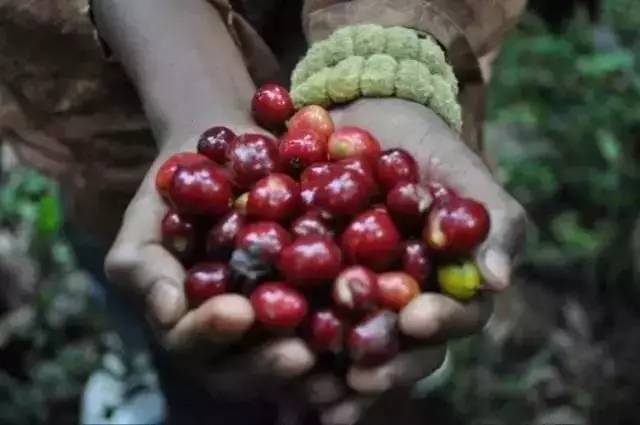
Coffee farmers carry coffee now and in the future!
In this world, there are such a group of people, they deal with the land every day, they are not afraid of the wind, not afraid of the sun, they check from the source of coffee planting, they are diligent in the coffee field every day, care for every coffee, they are coffee farmers! The so-called grain is hard, and it is not too much to use on coffee. Please cherish every cup of coffee we drink,

A brief introduction to the cultivation of fine Costa Rican coffee beans, geographical location, climate and altitude
Coffee and bananas are the country's main exports. Coffee was introduced into Costa Rica from Cuba in 1729. Today, its coffee industry is one of the well-organized industries in the world, with a yield of 1700 kg per hectare. Costa Rica, with a population of only 3.5 million, has 400 million coffee trees, and coffee exports account for 25 per cent of the country's total exports. Costa Rica has also benefited from

A brief History of Coffee
Coffee was first found in present-day East Africa Ethiopia. The popular saying is that a shepherd named Kaldi found that the goat was agile after eating a kind of berry. Out of curiosity, Kaldi tried to eat a little himself. He found the berries refreshing him. This energetic berry soon became well known in this area. Coffee was first disco

Introduction to the characteristics of Bolivian Coffee Flavor and Taste Manor
Arabica coffee cannot be grown in cold places above 2000 meters above sea level. if the altitude is too high, coffee trees will frost because the temperature is too low. So Bolivian coffee is mainly grown in the Yungas region northeast of La Paz. It borders the Amazon basin and is about 1500-2500 meters above sea level with an average annual temperature of about 10-15 ℃. Therefore, it ensures the growth of coffee.

How much is a cup of St. Helena's coffee? Introduction of St. Helena Sandy Bay Manor Sandy Bay Estate
Professional coffee knowledge exchange more coffee bean information please follow the coffee workshop (Wechat official account cafe_style) according to the world's ten most expensive coffee recommended by Forbes in 2006 are: rose coffee (Hacienda la Esmeralda Geisha), civet coffee (Kopi Luwak), St. Helena coffee (Island of St. Helena Coffee), El Injer

Introduction to the description of Flavor of High-quality Coffee in producing area
Bolivia is 1/3 of the Andean mountains, rugged terrain, mainly road transport, accounting for more than 85% of transportation. The main railway and road networks are concentrated in the west, and remote areas rely on air communication. But road coverage is the lowest in South America. And there is also the Ronggas Highway, the world's first insurance road known as the road to death. There is no developed economy here. It is the poorest in South America.

Tanzanian coffee
Tanzanian coffee belongs to Central/East African washed (wet process) coffee beans, which are characterized by bright acidity and wild flavor stimulation. The best coffee in this kind is undoubtedly Kenya coffee. Beans are usually picked out individually and sold at a higher price, but they often do not perform well in the cup, making people feel that they are not worth the money. Tanzania garden beans as a new coffee bean

The income of Yunnan farmers is decreasing year by year. The plight of Yunnan small-grain coffee, please cherish every cup of coffee.
Professional coffee knowledge exchange more coffee bean information Please follow the coffee workshop (Wechat official account cafe_style) is another year's harvest season, Yunnan coffee is generally a bumper harvest. Fresh red and green fruits hang all over the branches, and coffee enters the harvest season in Yunnan at the end of November. According to the report of Industry and Economic observation, the income of Yunnan farmers has decreased year by year, and the price this year is about 30% lower than that of the same period last year. Kanongle

The life cycle of coffee and digital coffee trees is about 50 years.
The life cycle of coffee trees is about 50 years. There are 73 coffee varieties, but only two are widely used. Arabica (Arabica) and Roberta (). The two oldest and best varieties of Arabica coffee are Typica and Bourbon. There are about 2250 ships engaged in coffee bean transportation around the world. There are more than 200 Arabica coffee

A brief introduction to the unique acid cliff manor boutique coffee bean flavor, taste and aroma characteristics
Flavor: the aroma is very strong and has a long-lasting fruit flavor. Blue Mountain Coffee is not packed and transported in cloth bags as 60kg / bag as other coffee, but in wooden barrels to the standards of 70kg/, 18kg/ and 15kg/ barrels. Jamaica is also the last country to still transport coffee in traditional wooden barrels. Jamaican blue mountain coffee beans must get Jamaican coffee

Introduction of Ruvuma producing area of Rovuma in Tanzania introduction to the flavor characteristics of Tanzanian coffee
Professional coffee knowledge exchange more coffee bean information Please follow the coffee workshop (Wechat official account cafe_style) Coffee is the largest crop in Tanzania about 450000 people are engaged in coffee-related agriculture. Due to its proximity to Kenya, the flavor of coffee in Tanzania is similar to that of Kenyan coffee, but because of inconvenient transportation and backward basic coffee equipment, coffee

The main coffee growing area in Bolivia is Yungas in the northeast of La Paz.
Bolivia is 1/3 of the Andean mountains, rugged terrain, mainly road transport, accounting for more than 85% of transportation. The main railway and road networks are concentrated in the west, and remote areas rely on air communication. But road coverage is the lowest in South America. And there is also the Ronggas Highway, the world's first insurance road known as the road to death. There is no developed economy here. It is the poorest in South America.